
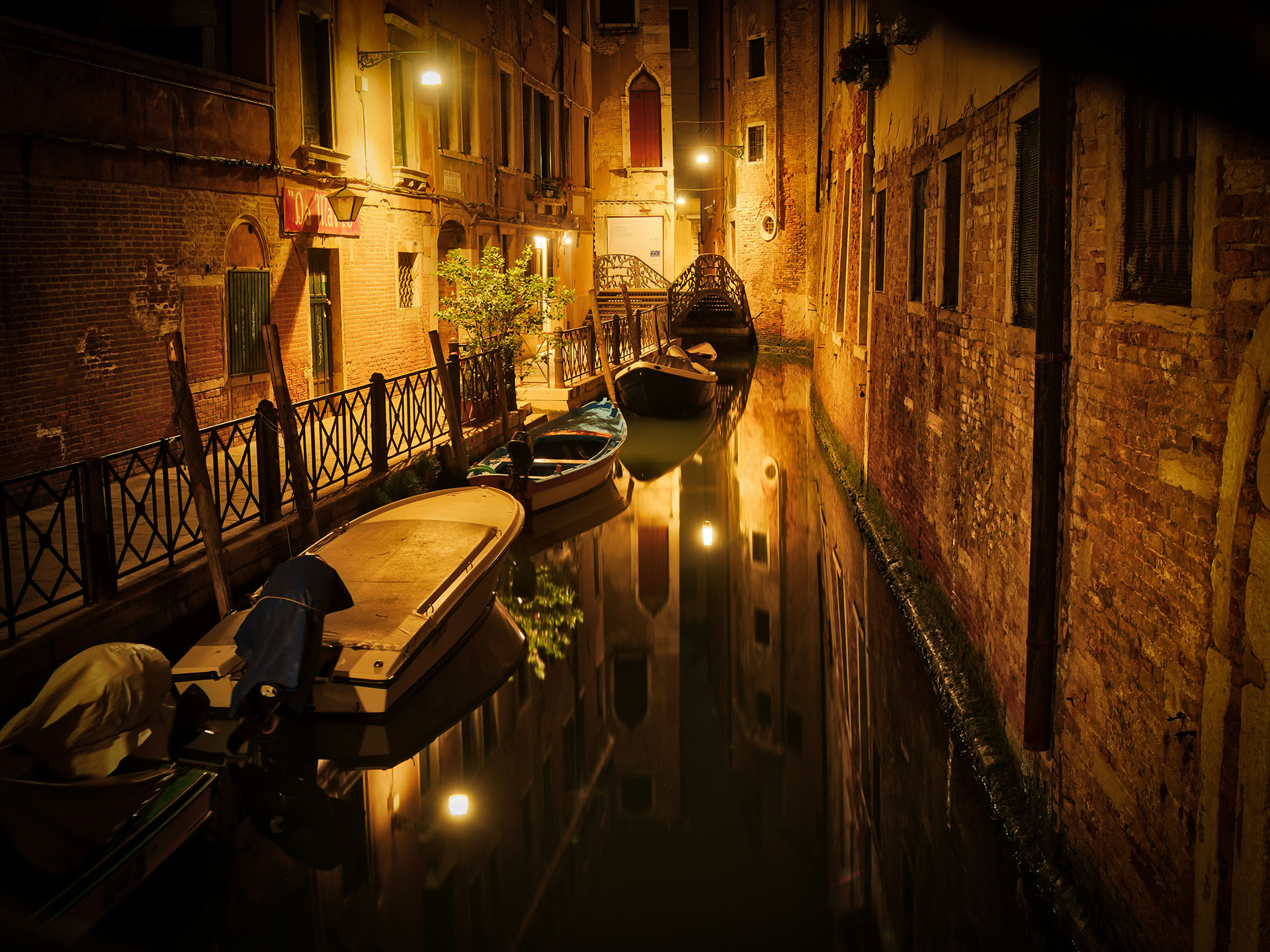
Photo by Alessio Furlan on Unsplash
My first visit to Venice happened to coincide with the 40th anniversary of Don’t Look Now.
My second visit came recently, more than fifty years after the film’s release, yet the city seems to conspire with memory itself.
The canals twist like Roeg’s camera angles, the piazzas open and close like fleeting frames, and every shadowed corner whispers the film’s uneasy magic. Venice captivates me anew, and with each turn, I feel both the thrill… and the chill.
For a first-time visitor, it’s easy to sympathise with Goethe’s inability to stay. Venice is both preposterous and sublime — too much to take in at once…
Its artistry, inseparable from the history on which it was built, is breathtaking. Walking through the city, you feel the pulse of civic life, the weight of centuries, and the extraordinary possibility of human creation condensed into stone, water, and light.
And yet, what does Venice mean in the 21st century? Undeniably alive, a modern city, it is increasingly defined by its role as a spectacle. Its images, endlessly repeated in film and literature, make the streets feel like a stage set — each weathered façade a carefully dry-brushed painting, each canal a ribbon of suspended time.
It would be easy to call this artifice the city’s defining trait, but Venice is more complex than that.
It is a living simulacrum: both itself and a projection of itself, sustaining the present through the constant performance of its past.
Visiting Venice, I discovered that the city, like Roeg’s film, lingers long after you leave. Its beauty, its strangeness, its uncanny perfection fold into memory, impossible to fully capture, yet impossible to forget. Walking its streets, you feel as though you are both observer and part of the mise-en-scène — a fleeting presence in a city that performs itself endlessly, haunting and unforgettable.